
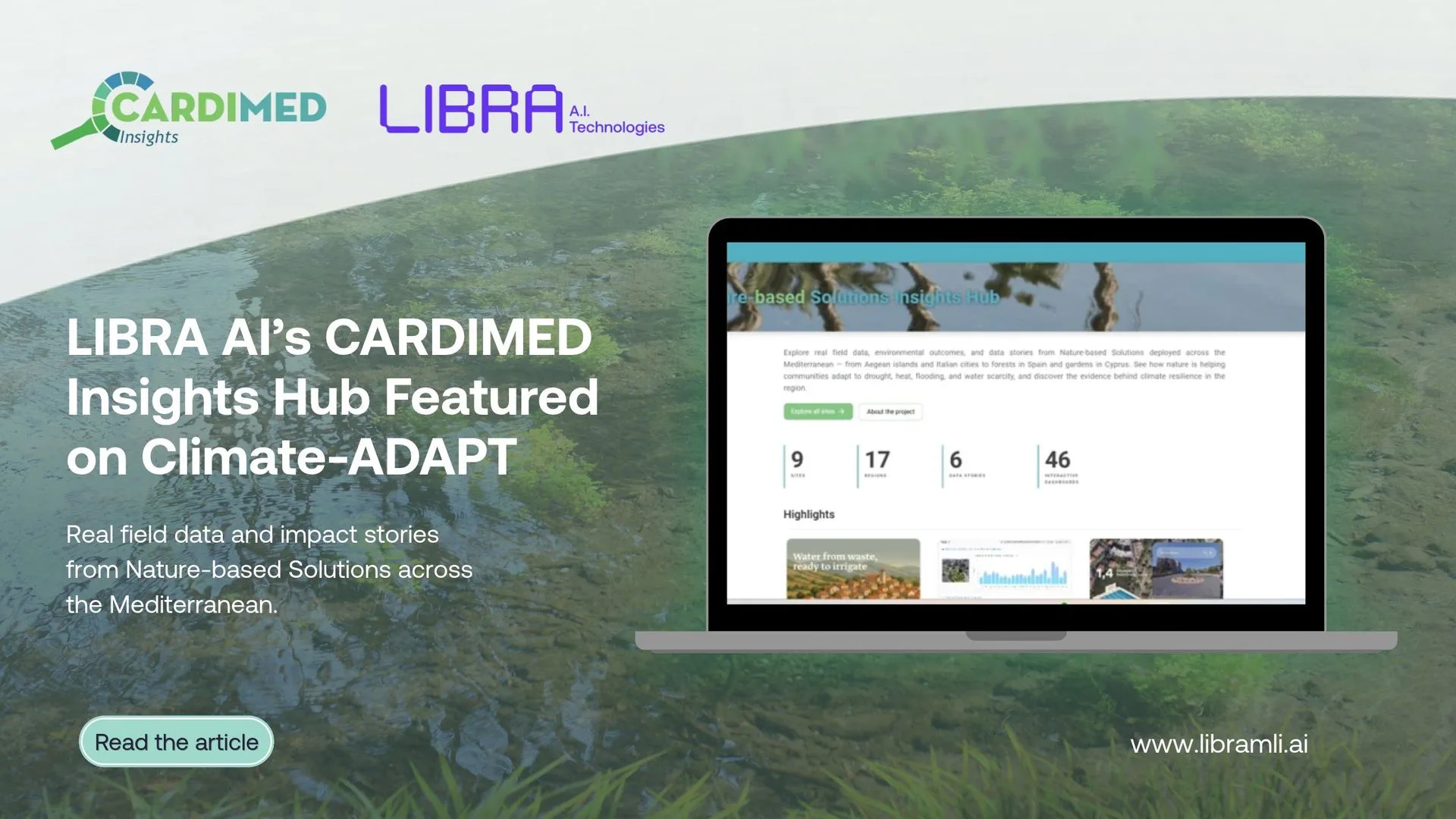
The CARDIMED Insights Hub, developed by LIBRA AI Technologies, is now featured in the Navigator of Climate Adaptation Tools on Climate-ADAPT, the European Union’s first-stop knowledge platform for climate change adaptation. Jointly developed by the European Commission and the European Environment Agency (EEA), it is maintained by the EEA with support from the European Topic Centre on Climate Change Adaptation and LULUCF (ETC/CA). The platform also hosts dedicated knowledge hubs, including the European Climate and Health Observatory, which provides specialized knowledge on the links between climate change and human health.
Its inclusion marks an important milestone for LIBRA AI, giving our work greater visibility among public authorities, practitioners and organisations working on climate resilience and nature-based solutions.
Developed within the Horizon Europe-funded CARDIMED project, the Hub turns environmental data into accessible, interactive experiences. By helping people explore local evidence and understand the effects of nature-based solutions (NbS), it supports the awareness and informed engagement needed to encourage their adoption.
Making Nature-Based Solutions Easier to Understand
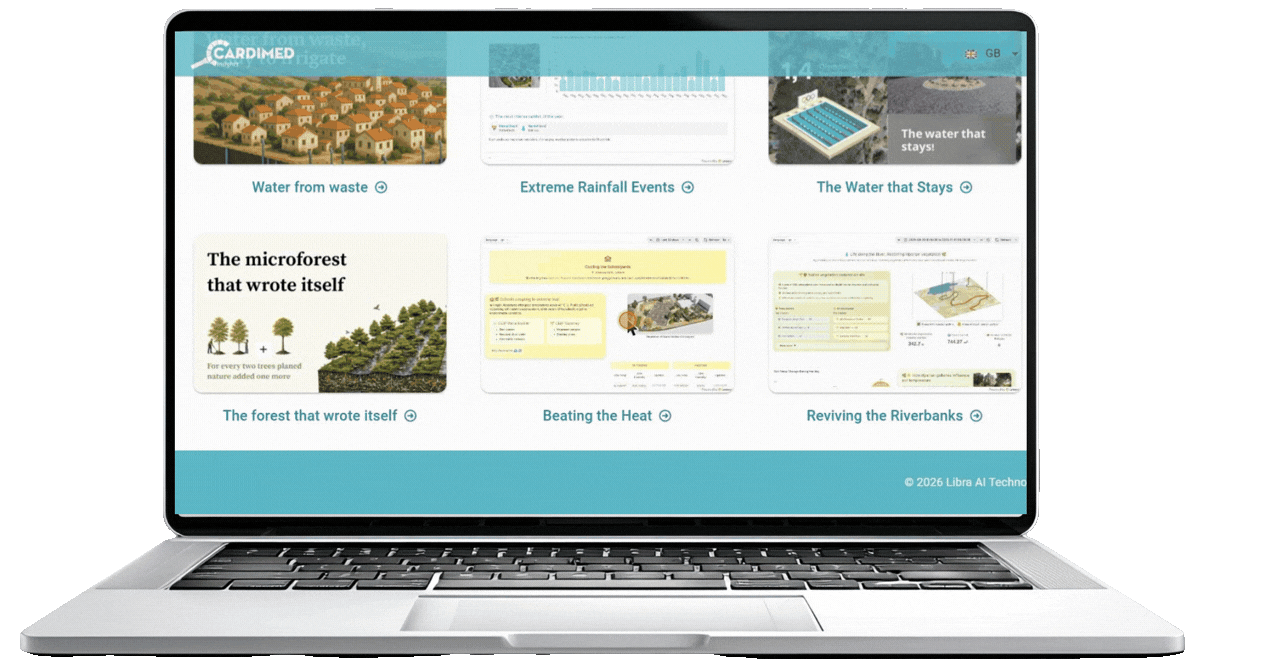
Supporting NbS adoption requires clear communication about how these solutions work, the challenges they address and the benefits they can bring to communities. The CARDIMED Insights Hub responds to this need through interactive dashboards, maps and data stories that connect environmental evidence with local examples.
Users can explore information from Mediterranean demonstration sites, covering topics such as weather, air quality and water systems. Presenting this information in engaging visual formats helps make complex findings easier to understand and creates a shared basis for discussion among citizens, local communities and decision-makers.
This connection between evidence and engagement is also reflected in the Climate-ADAPT listing, which highlights the Hub’s contribution to monitoring and evaluation, public communication and awareness-raising. Together, these functions help make the performance and impacts of implemented nature-based solutions more visible.
Bringing LIBRA AI’s Work to a Wider European Audience
The Hub’s inclusion follows an assessment of more than 360 climate adaptation tools across Europe by the European Environment Agency (EEA) and the European Topic Centre on Climate Change Adaptation (ETC-CA). Its selection was confirmed in August 2026, following a review against criteria including interactivity, reliable data sources, maintenance and relevance to adaptation planning and decision-making.
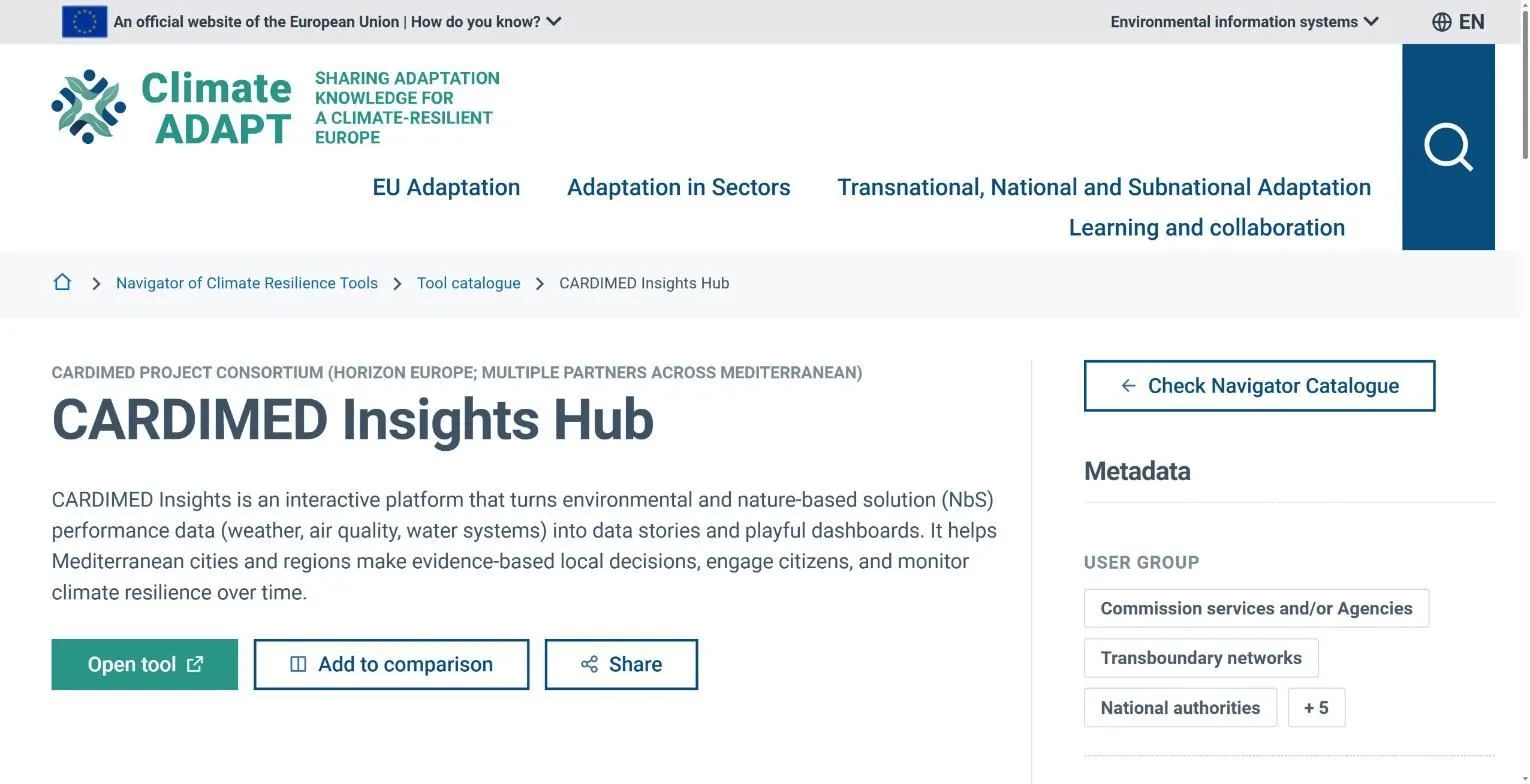
Now published in the Navigator, the Hub has an additional route to reach audiences who can use and share CARDIMED’s evidence. For LIBRA AI, this extends the reach of our work in data analytics, visualisation and storytelling, helping knowledge generated through European research become more accessible beyond specialist teams.
From Project Knowledge to Wider Impact
This milestone reflects our broader contribution to CARDIMED: making environmental evidence understandable and useful so that it can support informed engagement with nature-based solutions. Greater visibility through Climate-ADAPT strengthens the opportunity for that work to inform conversations about NbS adoption and local climate resilience.
We are proud to see the Hub reach this European platform and thank our team and CARDIMED partners for the expertise, data and feedback that have shaped its development.
Discover the Hub on Climate-ADAPT and explore the CARDIMED Insights Hub.