
In June 2024, LIBRA AI Technologies' Measurement & Verification (M&V) framework was prominently featured at two major events, capturing significant attention and demonstrating our innovative approach to accurately quantifying energy savings and enhancing sustainability for smart proactive buildings. These conferences allowed LIBRA AI Technologies to connect with a diverse audience, emphasizing the importance of precise energy savings measurement in urban sustainability efforts and strengthening our engagement with industry professionals and research experts.
June 13, 2024 | e.nova - International Conference
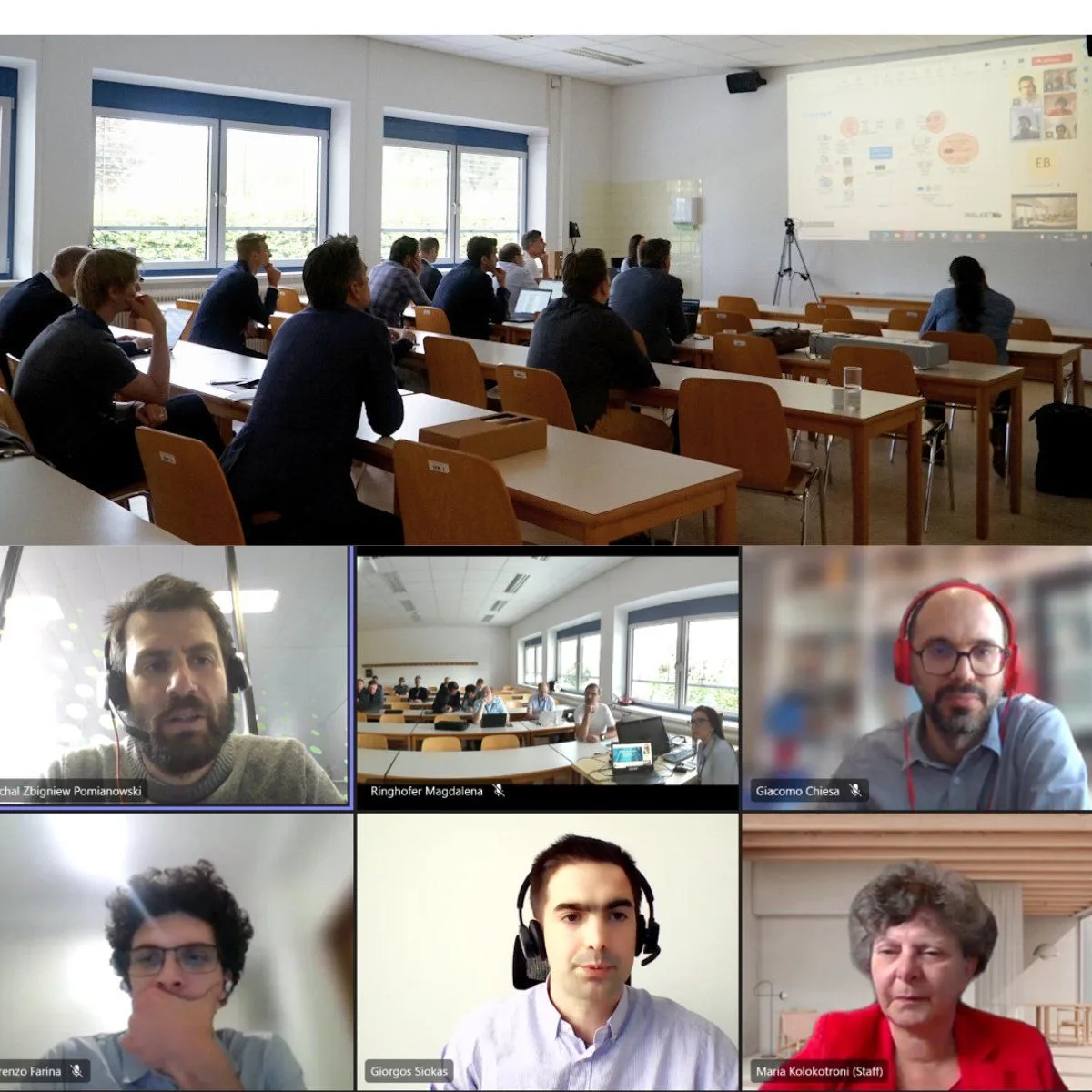
Our engagement began at the e.nova -International Conference on Intelligent Energy and Climate Strategies on June 13, 2024, during a PRELUDE EU-funded Project session organized as a hybrid event. During the session, Siokas George, EU R&D and Innovation Project Manager outlined how LIBRA AI's Measurement and Verification framework combines traditional statistical methods with machine learning techniques to accurately measure energy savings in urban buildings. The conference, dedicated to pioneering energy and climate strategies, was ideal for showcasing the framework's capabilities and benefits.
June 19-21, 2024 | Net-Zero Future Conference
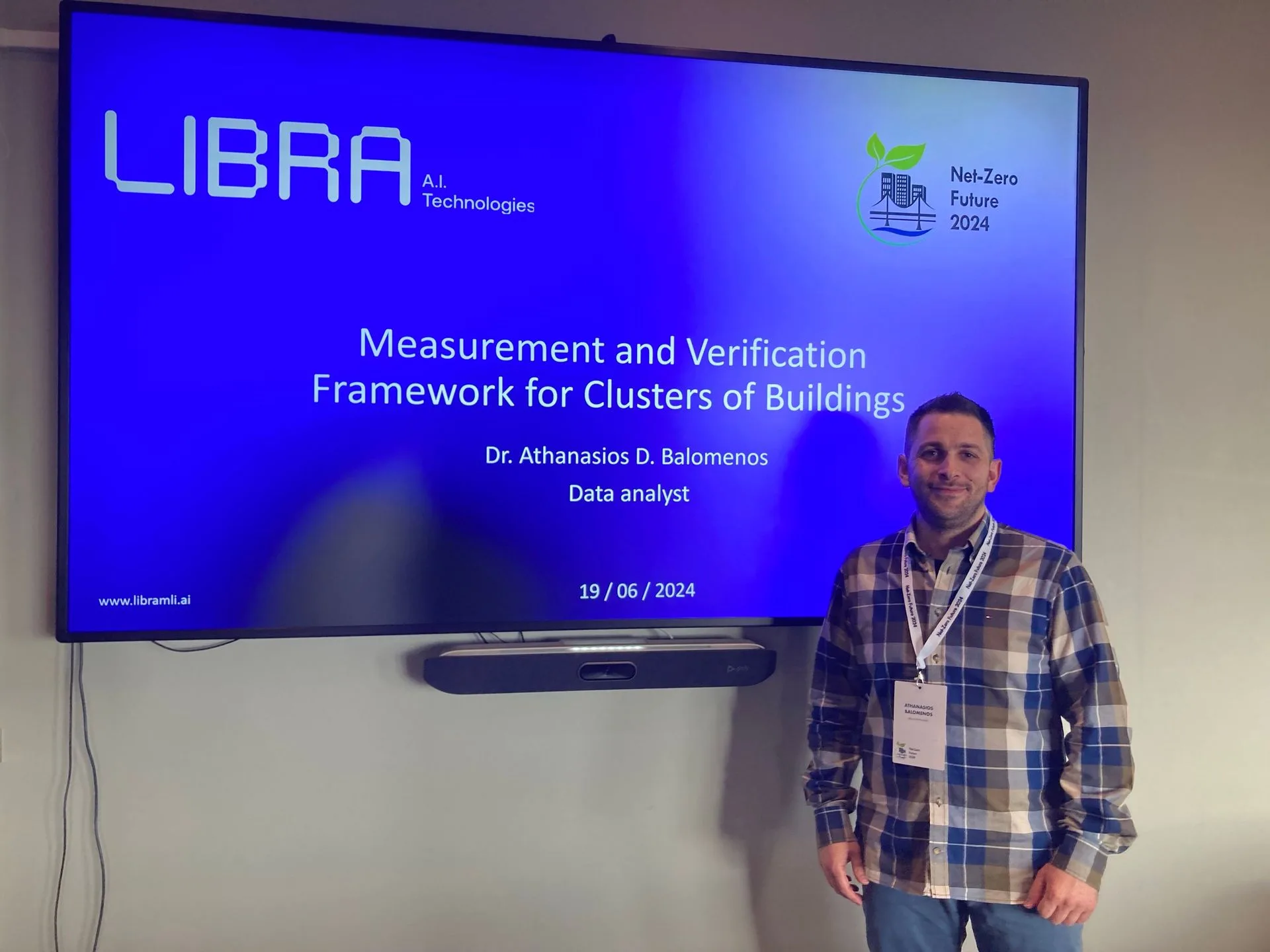
Following the 𝐞.𝐧𝐨𝐯𝐚 conference, our M&V framework was also presented at the Net-Zero Future Conference, held from June 19-21, 2024, in Oslo, Norway. During this event, our CTO, Athanasios Balomenos, highlighted our method for validating and quantifying savings from large-scale building interventions. The conference focused on climate innovation and provided a valuable opportunity to demonstrate our commitment to advancing energy efficiency practices. Athanasios Balomenos detailed the methodology developed under the PRELUDE Project, which systematically assesses, monitors, and reports energy savings.
A Closer Look at LIBRA's M&V Framework
The world’s population is increasingly urbanizing, which amplifies buildings' role in energy consumption. Urban buildings are now among the most significant contributors to global energy use, making energy savings crucial for economic and social prosperity. Buildings are pressured to adopt sustainability and energy efficiency measures, pushing managers and owners to invest in energy conservation measures (ECMs) and new intelligent technologies for monitoring and reducing energy consumption.
Quantifying energy savings from these interventions is complex, as direct calculation is not feasible. Savings must be estimated by comparing energy consumption before and after interventions, with necessary adjustments for various factors. Existing literature supports the use of M&V methods, which systematically evaluate the impact of energy efficiency measures and investments, following established protocols like the International Performance Measurement and Verification Protocol (IPMVP).
Within the PRELUDE project, our M&V framework was developed to incorporate classical statistical techniques (M&V 1.0) and machine learning techniques (M&V 2.0) tailored to each building's characteristics. The introductory section of the framework provides an overview of key concepts, while the rest of the study presents results from its application to commercial and private buildings.
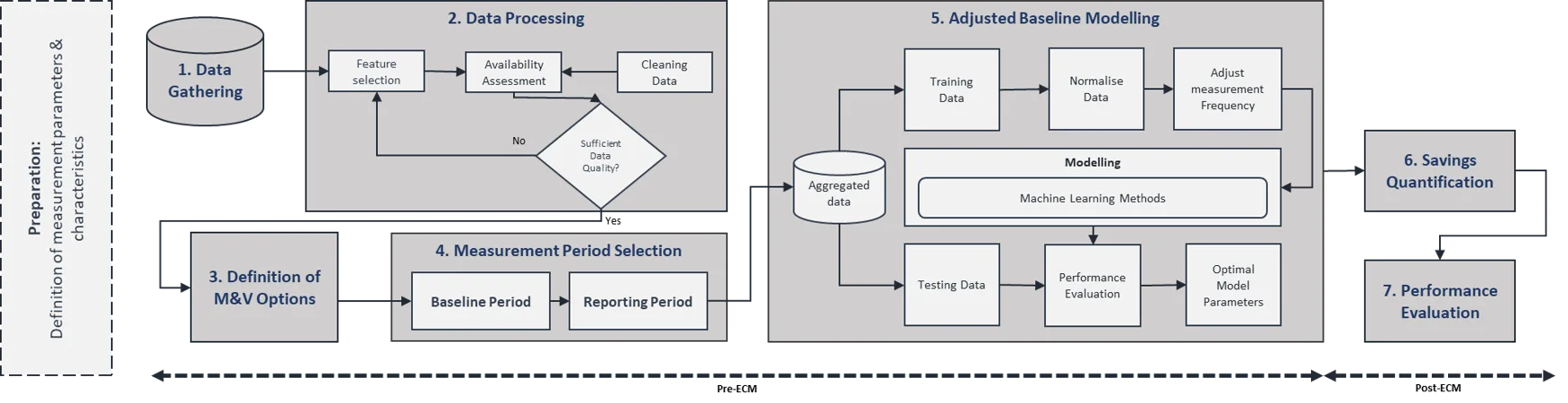
The framework is systematically applied and tested on demo cases within the PRELUDE project. Based on the models’ CV(RMSE) performance, adjusted baseline models were developed for each building to predict post-intervention energy consumption. Rigorous testing of these models validated the process, showing versatility across varying datasets. The study estimated energy savings for cases reporting interventions and examined future challenges in measuring and verifying building energy consumption.
Our company's participation in the PRELUDE Project highlights our dedication to advancing energy efficiency strategies to contribute to global environmental and sustainability goals. The insights gained from our M&V framework provide significant value to both the project and the broader field of smart energy management.