
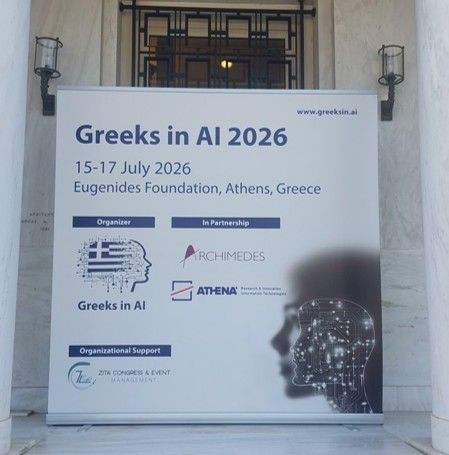
LIBRA AI Technologies joined the Greek AI community at Greeks in AI 2026 Symposium, held from 15 to 17 July 2026 at the Eugenides Foundation in Athens. The symposium is an annual gathering that brings together Greek AI scientists and practitioners from around the world to connect, collaborate, and share ideas. On 16 July, our team presented two projects at the poster sessions. Different as they are in domain, virtual reality and Alzheimer’s disease, both tackle the same underlying problem: how to model something that can’t be directly observed, a user’s gaze in one case, disease-relevant patterns in cell data in the other.
Our CTO Athanasios Balomenos and CEO Yannis Kopsinis welcomed a steady stream of visitors to our stand, walking them through the challenges we’re addressing and our contributions to innovation in AI, and answering questions from researchers, students, and industry peers alike.
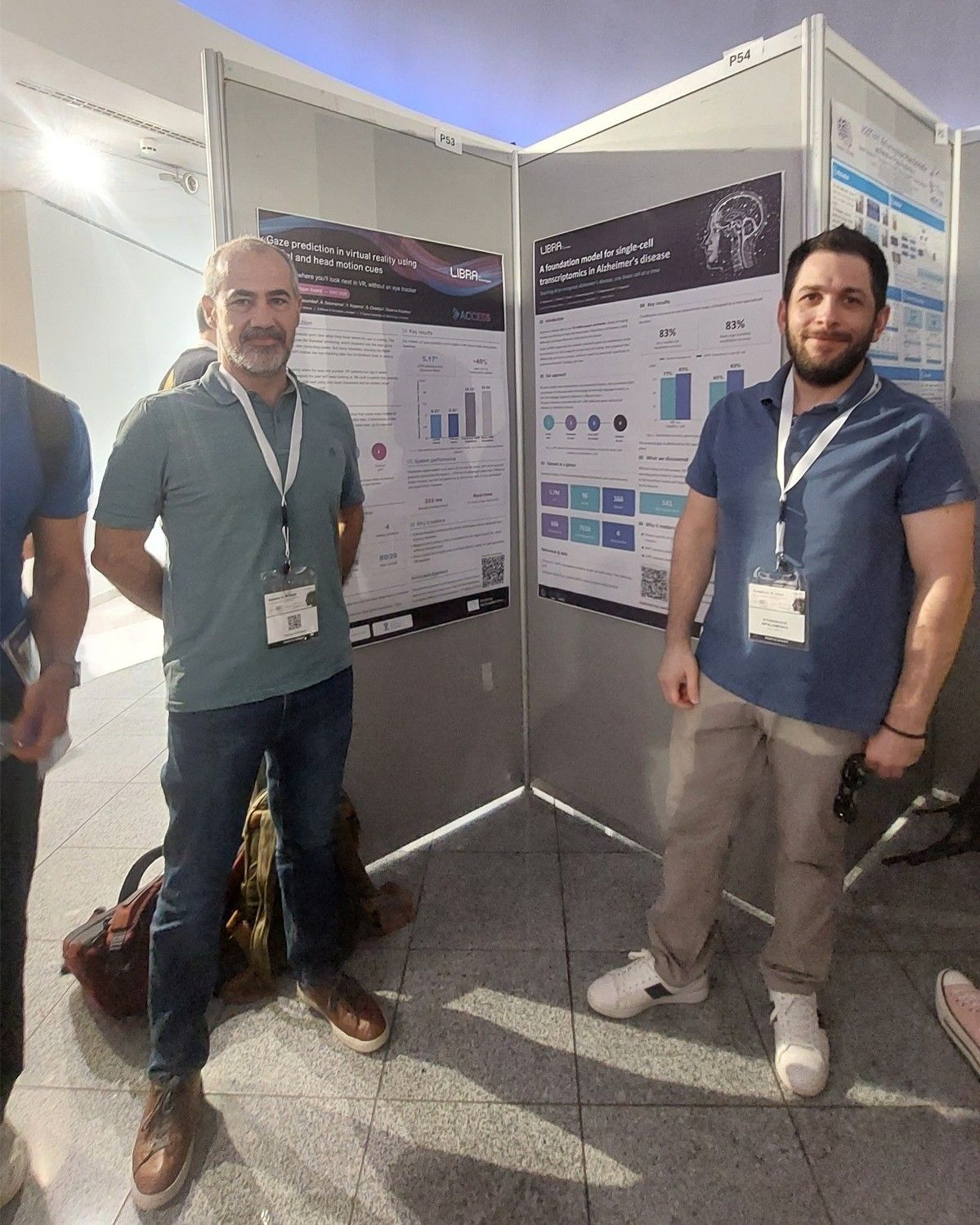
Figure 1 Yannis Kopsinis, CEO, and Athanasios Balomenos, CTO, supporting LIBRA's presence at the Greeks in AI poster session
Gaze Prediction in Virtual Reality Without Eye Tracking
Many virtual reality applications need to know where a user is looking, for example to power foveated rendering, which concentrates computing power exactly where the eye is focused. Dedicated eye-tracking hardware, however, is often unavailable, whether for cost or privacy reasons. Our first project, Gaze Prediction in Virtual Reality Without Eye Tracking Using Visual and Head Motion Cues, addresses this gap, and earned LIBRA AI a Springer Best Paper Award at ISVC 2025.
Our framework predicts a user’s gaze without any eye tracking at all. It combines head-motion signals from the VR headset with visual saliency cues extracted from the scene, using a lightweight saliency encoder (UniSal) and compact time-series models (TSMixer and LSTM) to forecast where the user will look next. Tested on the EHTask dataset and on commercial VR hardware, it consistently outperformed standard baselines, reducing perceptual lag and enabling smoother, more natural interaction. The work was carried out within the EU-funded ACCESS project.
The poster is available here.
The paper is available here.
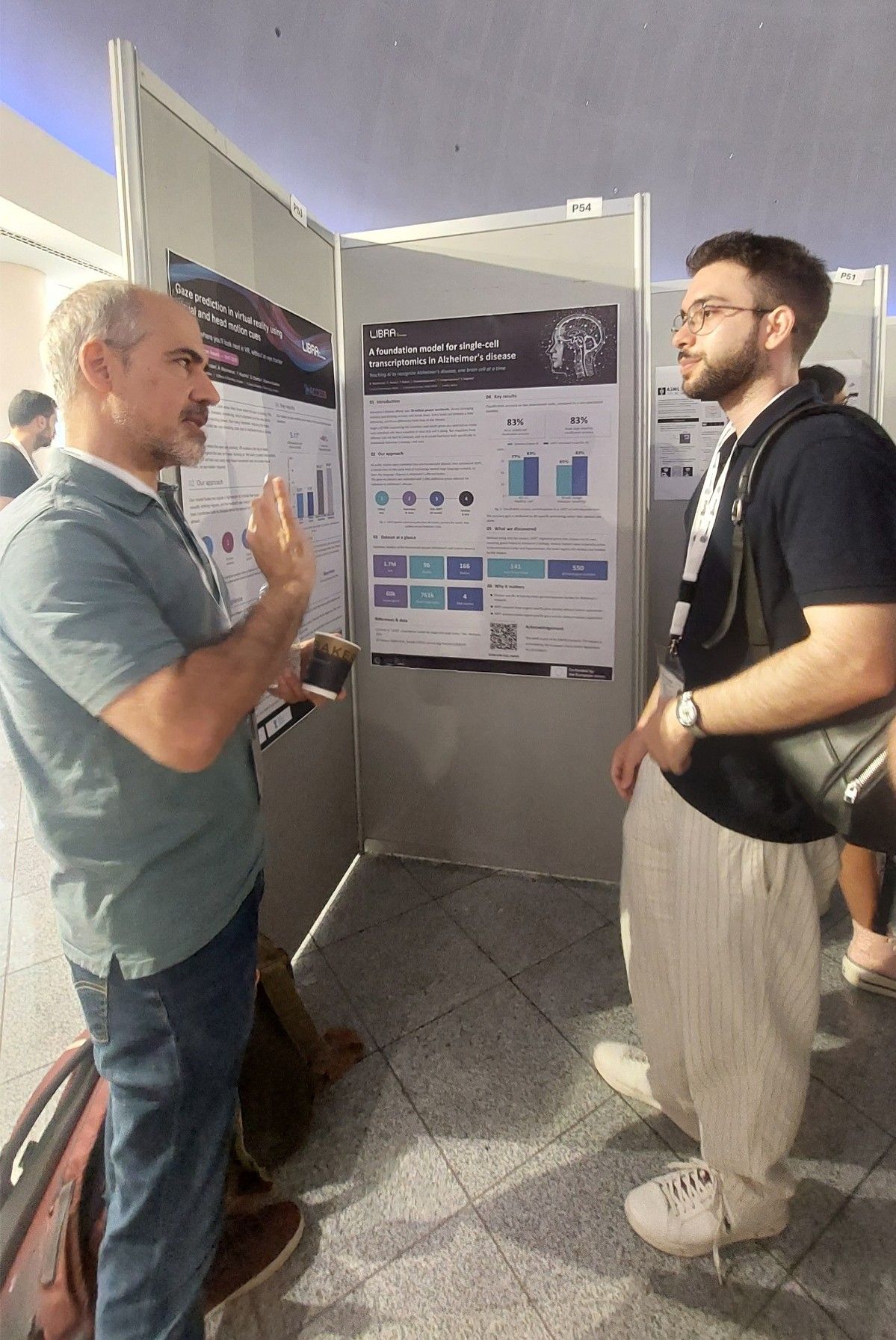
Figure 2 Yannis Kopsinis, LIBRA CEO, presenting during the Greeks in AI poster session
A Foundation Model for Single-Cell Transcriptomics in Alzheimer’s Disease
Single-cell RNA sequencing offers extraordinary resolution into brain tissue, but extracting consistent signals across large, diverse datasets remains a major bottleneck in Alzheimer’s research. Our second project, A Foundation Model for Single-Cell Transcriptomics in Alzheimer’s Disease, turns from virtual reality to human biology to address exactly that.
To meet it, we built a foundation model, a transformer-based generative architecture, extended with a curated gene vocabulary, trained on a harmonised compendium of 1.7 million single cells from Alzheimer’s and control brains. The model reaches 83% accuracy in distinguishing Alzheimer’s from control cells and 83% accuracy in predicting Braak stage, substantially outperforming non-pretrained baselines. Beyond classification, it can surface biologically meaningful gene clusters on its own, a step towards accelerating discovery in complex disease areas. The work is part of the EU-funded ENFIELD project.
The poster is available here. It placed third in the conference’s audience poster vote.
The paper is available here.
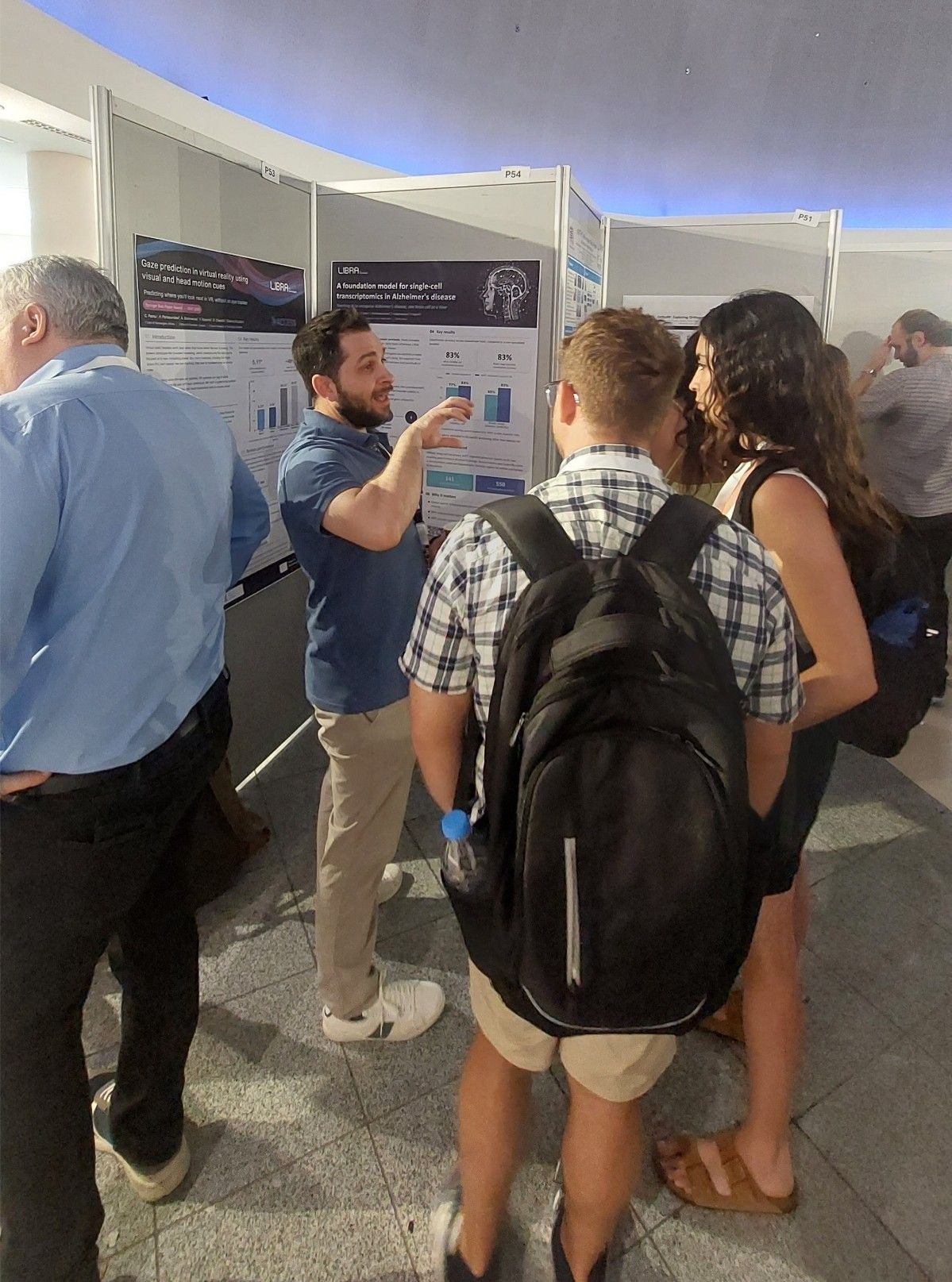
Figure 3 Athanasios Balomenos, LIBRA CTO, engaging with visitors at the Greeks in AI poster session
Beyond our own poster stand, the day was a genuine exchange. Our team discussed ideas with fellow participants, listened to a series of thought-provoking talks, and felt first-hand the energy of a community working to position Greece as a hub for AI excellence. Conversations at the poster boards turned into introductions, and introductions into the kind of connections that outlast a single event.
Final Thoughts
Both projects reflect what LIBRA AI Technologies is about: turning advanced research into AI that works in the real world, across domains as different as virtual reality and biomedical discovery. We remain committed to scientific excellence and to building practical, high-value solutions that make a measurable difference.
Greeks in AI 2026 was a reminder of why events like this matter: they put research in front of the people who can challenge it, build on it, and carry it forward. We are grateful to the Greeks in AI community for the excellent organisation and for hosting us, and we congratulate the organisers on bringing together such a vibrant gathering. We left with new ideas, new contacts, and real enthusiasm for what comes next, and we look forward to the opportunities the future holds.