
Case Studies
Technology is best judged in context.
This selection of our AI engineering projects shows how we turn real business and operational challenges into working systems that reach production.













Client's name and type: National Bank of Greece (NBG), systemic bank
Industry: Banking and Financial Services
Project/Solution: AI-powered document classification tool
Problem:
NBG needed to classify large volumes of customer documents quickly and accurately, so that each file reaches the right OCR system. Existing solutions could not scale to a growing number of document classes and were not robust to outliers. The scope started with 2 classes and was expected to exceed 70, including tax documents, utility bills, identity cards, professional IDs, residence permits, passports, payroll documents and pension statements, each with different layouts.
Overview:
We developed a document classification tool built on a state-of-the-art transformer model and automated Azure ML pipelines. It covers dataset management, filtering of mislabelled images, stratified data augmentation for imbalanced classes, model training and deployment to online and batch endpoints. MLOps practices ensure continuous monitoring and experiment tracking.
Tools developed:
· Transformer-based models for document classification
· Dataset management for adding, correcting and removing classes and images
· Mislabelled image filtering
· Stratified data augmentation
· Azure ML pipelines automating the full process
· Online and batch endpoints
· Automated deployments to development, QA and production
Impact:
NBG runs the online endpoint in production to identify documents submitted through internet banking, branches and internal apps, with inference in under one second. Batch endpoints organise large archives of historical documents. New document classes can be added and deployed within 4–5 days with minimal technical effort.
Challenges met: Large and growing number of classes, overlapping classes, data inconsistency, class imbalance and mislabelled data.
Technologies used: Python, PyTorch, Hugging Face, Azure ML, MLflow, Pandas and Matplotlib.
Client's name and type: National Bank of Greece (NBG), systemic bank
Industry: Banking and Financial Services
Project/Solution: AI-assisted system for drafting, reviewing and validating circular documents
Problem:
Circulars are critical internal communications at NBG. Drafting and reviewing them took significant manual effort, and format, tone and style varied from one document to the next. The bank also needed ways to check coherence and findability, and to automate repetitive tasks such as summaries and FAQs.
Overview:
We designed an AI-assisted system that supports circulars from first draft to final validation. Using generative AI adapted to Greek, it creates drafts from user input, reviews finished sections for grammar, style and tone, summarises content and generates FAQs, all through a single API.
Tools developed:
· Draft generation from predefined templates
· Review and editing with feedback on readability, logical flow and style
· Section summarisation
· Structured FAQ generation
· API endpoints for integration with internal systems
Impact:
Automated drafting and editing reduced the time needed to produce circulars, freeing employees for higher-value work. Circulars now follow a consistent format, tone and style, summaries and FAQs make them easier to understand, and evaluators can assess document quality faster.
Challenges met: Greek-language generative AI, alignment with internal style guidelines, employee onboarding, and testing against NBG’s operational standards.
Technologies used: Python, OpenAI GPT models adapted for Greek, FastAPI, spaCy, PostgreSQL, Docker and Azure.
Client's name and type: National Bank of Greece (NBG), systemic bank
Industry: Banking and Financial Services
Project/Solution: RAG Evaluation Framework
Problem:
Developing reliable Retrieval-Augmented Generation (RAG) systems requires careful choices across document processing, retrieval methods, language models and evaluation approaches.
The challenge was to establish a systematic way to develop, test and compare RAG configurations, while retaining the flexibility to adapt to evolving technologies and application requirements.
Overview:
LIBRA AI developed a modular framework for configuring, testing and evaluating end-to-end RAG systems.
The framework supports document preparation and indexing, configurable RAG pipelines, evaluation dataset generation and comparative experimentation in a unified environment.
Tools developed:
· Modular RAG pipelines: Configurable document processing, retrieval strategies and language models.
· Document processing and indexing: Structured preparation of documents for retrieval.
· Evaluation dataset generation: Automated generation of question–evidence pairs for expert review and evaluation dataset development.
· Evaluation and experimentation framework: Comparative assessment of RAG configurations, including retrieval and answer-generation performance.
Impact:
The framework enables systematic, evidence-based comparison of RAG configurations, providing a consistent basis for assessing performance and informing architectural decisions.
Its modular design allows new models and techniques to be evaluated within the same framework, supporting the continuous evolution of RAG systems.
Challenges met: Maintaining consistency across different RAG configurations, handling complex document structures and ensuring comparable evaluation results.
Technologies used: Modular RAG architectures, retrieval and indexing technologies, language models, and evaluation tools.
Client's name and type: National Bank of Greece (NBG), systemic bank
Industry: Banking and Financial Services
Project/Solution: Enterprise AI Assistant
Problem:
Large volumes of information, spread across different document types and sources, can be difficult to navigate, particularly when documents are interconnected and their content evolves over time.
Answering complex questions often requires bringing together evidence from multiple sources, following cross-references and identifying the relevant version of the information.
The challenge was to make this process more accessible and reliable through a secure, conversational AI assistant, while preserving transparency and user control.
Overview:
LIBRA AI developed an enterprise AI assistant with a familiar, chat-based interface, enabling users to explore complex questions through natural-language conversations.
The solution combines a unified, version-aware knowledge base with agentic retrieval capabilities, allowing the assistant to investigate multi-part questions, consult relevant sources and refine its searches when needed.
Answers include references to supporting evidence, enabling users to examine the underlying information and guide further investigation.
Tools developed:
· Structured knowledge management: Organisation of complex information, preserving relevant relationships and successive content versions.
· Agentic research capabilities: Decomposition of complex questions and adaptive, multi-step retrieval across relevant sources.
· Evidence-grounded responses: Source-linked answers with mechanisms for identifying gaps in the available evidence.
· Secure conversational interface: Authenticated, multi-turn interactions with user guidance throughout the research process.
Impact:
The assistant brings complex information research into a unified, interactive environment, enabling users to explore questions beyond a single search or response.
By making supporting evidence accessible and keeping users involved in the research process, the solution supports more transparent and informed decision-making.
Challenges met: Managing complex and evolving information, coordinating multi-step investigations and maintaining traceability between generated answers and their supporting sources.
Technologies used: Large language models, retrieval-augmented generation, agentic AI and structured knowledge processing technologies.
Client's name and type: Greca (online travel agency)
Industry: Tourism
Project/Solution: Personalised recommendations, marketing analytics and conversion prediction
Problem:
Greca needed to grow its international customer base and stay competitive in a crowded global market. To do so, it had to offer each visitor a personalised experience, understand the full customer journey and spend its marketing budget where it drives conversions. Its sales and marketing teams also had no reliable way to tell which visitors were most likely to book.
Overview:
We built an integrated set of data and AI solutions for Greca. A recommendation system analyses web behaviour, such as visit duration and product exploration paths, to suggest the most relevant travel packages to new and returning visitors in real time, with A/B testing to keep improving results. A marketing analytics framework brings e-commerce, web behaviour and campaign data into one data warehouse and BI dashboard suite, with algorithmic attribution modelling that shows how each ad channel contributes to sales. A Propensity-to-Convert API then scores each visitor’s likelihood of booking in real time, so teams can focus on high-intent users.
Tools developed:
· Personalised recommendation system with a real-time API
· Advanced A/B testing for recommendation strategies
· Unified marketing data warehouse
· BI dashboard suite with algorithmic attribution modelling
· Propensity-to-Convert API with continuously retrained machine learning models
· Dashboards for propensity scores and campaign effectiveness
Impact:
Personalised recommendations improved user satisfaction and conversion rates. The marketing analytics framework gave Greca a single view of customer interactions and campaign performance, supporting smarter budget allocation and higher returns on ad spend. With propensity scores, sales and marketing teams engage the right visitors at the right time with tailored offers, reducing acquisition costs. Together, these solutions helped Greca attract more international customers and strengthen its position in customised Greek holiday packages.
Challenges met: Seamless integration with existing infrastructure, consolidation of multiple data sources, keeping recommendations current as products change, low-latency real-time predictions, continuous model optimisation and scalability.
Technologies used: Python, NodeJS, Apache NiFi, Matomo, PostgreSQL, MongoDB, Pandas, Scikit-learn, LLMs and Tableau Online.
Client's name and type: IKNOWHOW SA (GreenSprayer, BonsAPPs Horizon 2020 open call), technology and innovation company
Industry: Agriculture and Robotics
Project/Solution: Edge AI anomaly detection for plant health monitoring on a smart agriculture robot
Problem:
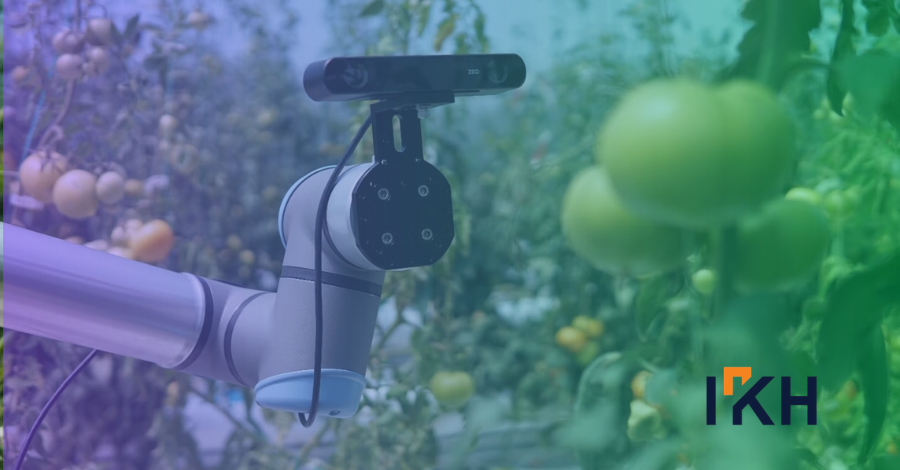
IKNOWHOW’s GreenSprayer is an autonomous, all-terrain ground vehicle with a robotic manipulator, designed to detect plant diseases and pests early and spray only the infested plants in greenhouses. Its vision module needed an AI model that could reliably spot diseases and infestations from the early growth stages, run on the robot’s edge hardware and help reduce the use of harmful pesticides.
Overview:
Over a six-month project, we developed an anomaly detection model based on the DeiT Vision Transformer architecture. We started from a model pre-trained on ImageNet with teacher-student distillation, fine-tuned it on the PlantVillage dataset and validated it on PlantDoc and a custom dataset of tomatoes and cucumbers from a greenhouse in Volos, Greece. Using Bonseyes Marketplace workflows, we optimised the model for edge deployment on x86_64 machines, Nvidia Jetson and Raspberry Pi devices.
Tools developed:
· Anomaly detection model based on the DeiT Vision Transformer
· Custom greenhouse dataset of tomatoes and cucumbers
· Fine-tuning and validation pipeline with PlantVillage and PlantDoc
· Edge deployment on x86_64, Nvidia Jetson and Raspberry Pi
Impact:
The model accurately identifies anomalies in plant leaves at both early and later growth stages, enabling earlier, targeted treatment and precise spot spraying. This reduces pesticide use and its environmental impact, supports healthier crop production in line with the EU Farm to Fork strategy and improves working conditions for farmers. The solution won the “Best Exploitation Solution” award at the AI World Summit in Amsterdam.
Challenges met: High data requirements of Vision Transformers, deployment across different edge hardware, curating real-world greenhouse data and integration with the Bonseyes Marketplace software.
Technologies used: Python, TensorFlow, ONNX, Docker, DeiT (Vision Transformer) and Bonseyes Marketplace workflows.
Client's name and type: IRIS srl (AR3K Project, funded through the AIBC Euroclusters cascade funding programme)
Industry: Industrial Water Treatment
Project/Solution: AI-driven process optimisation and blockchain-based billing for water treatment plants
Problem:
Industrial water treatment is essential for manufacturing but often comes with high operating costs, heavy energy consumption and limited water reuse. IRIS needed to retrofit existing treatment plants so they run more efficiently, reuse more water and cost less, while billing its customers transparently based on actual performance.
Overview:
We developed machine learning models that monitor the treatment process and adjust operating parameters, such as pump speed and water flow, in real time to maximise water reuse, reduce energy use and maintain water quality. Predictive maintenance detects early signs of issues such as membrane fouling. A private blockchain network between IRIS and its customers records performance data and automates billing through smart contracts linked to real-time water savings.
Tools developed:
· Machine learning models for real-time process optimisation
· Predictive maintenance for early fault detection, such as membrane fouling
· Private blockchain network based on Hyperledger Besu
· Smart contracts for performance-based billing
Impact:
Energy consumption fell by more than 25%, water recovery exceeded 70% and operating costs dropped by more than 10%, driven by energy savings and optimised chemical dosing. Payments are now linked to real-time water savings, and the system can be retrofitted to existing plants and scaled across different industrial settings.
Challenges met: Retrofitting existing treatment plants, real-time optimisation of multiple operating parameters, balancing water quality with energy use, early fault detection, and secure, transparent performance-based billing.
Technologies used: Machine learning, Hyperledger Besu and smart contracts.
Client's name and type: IKNOWHOW SA (technology and innovation company)
Industry: Robotics and Automation
Project/Solution: Dynamic path planning and execution for Autonomous Ground Vehicles (AGVs)
Problem:
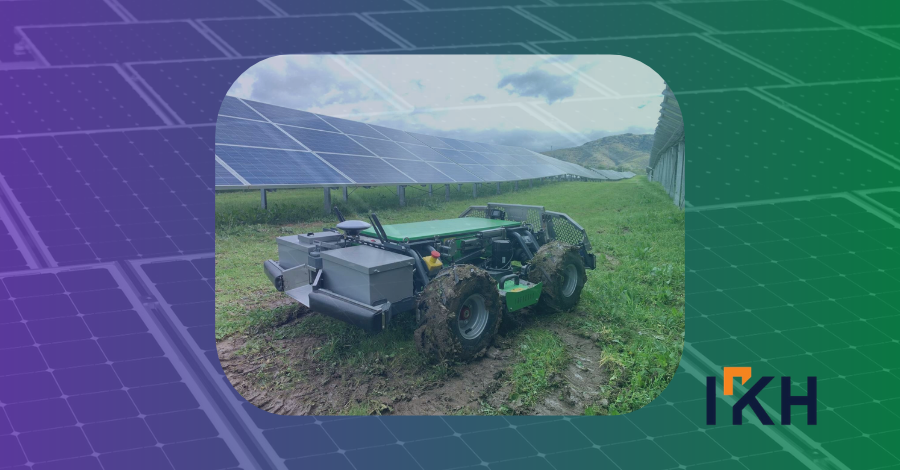
IKNOWHOW’s ARISTOS robot, used for grass cutting, surveillance and monitoring in solar parks, had to move through complex, changing environments with limited GPS coverage. Task planning relied on manual intervention, obstacle handling needed to be safer and more efficient, and energy use had to be balanced against task performance.
Overview:
We built a Technology-Specific Bridge (TSB) that connects the robot to a task-planning framework. ARISTOS can now plan and execute its own routes, avoid obstacles and adapt to real-time changes on site. The solution was validated in real-world operation at the Ekta Solar Park in Thessaly, Greece.
Tools developed:
· Technology-Specific Bridge (TSB) between the robot and the task planner
· Dynamic path planning framework
· Coverage path planning based on preloaded static maps
· Obstacle avoidance with real-time map updates
Impact:
ARISTOS covered 92.05% of the obstacle-free workspace, exceeding the initial target. Commissioning time dropped by more than 98%, the area covered per battery cycle increased by 11% and operation time fell by 12%, reducing costs and increasing productivity.
Challenges met: Navigation in GPS-denied zones, dynamic obstacle avoidance, real-time adaptability and balancing energy consumption with task efficiency.
Technologies used: Python, grid mapping algorithms and dynamic path planning frameworks.
Client's name and type: Piraeus Container Terminal (PCT), container terminal operator
Industry: Ports and Logistics
Project/Solution: RESONATE, a 5G and AI-enabled driver fatigue monitoring system for heavy machinery operators
Problem:
Driver fatigue is a serious safety risk for operators of trucks and cranes at container terminals. PCT needed a reliable, real-time way to detect drowsiness and alert drivers before it leads to accidents, operational delays, financial losses or injuries.
Overview:
RESONATE uses computer vision to monitor drivers’ faces and assess their alertness in real time. It combines an in-truck (edge) unit for instant detection and alerts with server-side modules for deeper analysis, connected over 5G. An interactive dashboard suite provides insights into fleet behaviour. Video is processed on the fly and only non-reversible embeddings leave the vehicle, so the system is GDPR compliant.
Tools developed:
· Computer vision architecture for continuous drowsiness detection
· In-truck edge unit for on-the-fly video processing and immediate alerts
· Server-side processing based on driver behavioural features
· Interactive dashboards for real-time monitoring of fleet fatigue
Impact:
RESONATE reduced fatigue-related accidents at PCT, creating a safer workplace with fewer operational disruptions. Real-time alerts keep drivers alert, cutting accident-related costs and delays, while the dashboards support data-driven fleet management. Its privacy-by-design approach also builds trust with drivers.
Challenges met: Variable lighting conditions, high- and mid-frequency vehicle vibrations, changes in seat suspension, minimising false alarms, limited availability of GPU-enabled edge devices, and privacy and GDPR compliance.
Technologies used: Kafka, Flink, TensorFlow, edge computing and 5G.
Client's name and type: u-blox (technology solution provider)
Industry: Information Technology
Project/Solution: Deep learning-based indoor positioning using Angle of Arrival (AoA) estimation
Problem:
Indoor positioning is in high demand for uses such as navigation in hospitals, offices and airports, and locating objects in warehouses. Bluetooth Low Energy (BLE) is an affordable, energy-efficient option, but its accuracy drops because signals reflect off walls and objects. u-blox wanted to explore how deep neural networks could make BLE-based positioning more accurate and robust.
Overview:
We developed deep learning models that estimate the position of a BLE tag from the signals received at multiple anchor points. Using the IQ components and signal strength (RSSI) of the received signals, the models estimate the Angle of Arrival at all anchors at once, and a least-squares positioning engine then calculates the tag’s position. Some architectures distribute the processing across the anchors, which makes embedded implementations easier.
Tools developed:
· Deep learning architectures for AoA estimation, including multilayer perceptrons and CNNs
· Joint multi-anchor AoA estimation with distributed processing
· Least-squares positioning engine
· Data augmentation strategy that reduces training data needs
· Open high-resolution dataset from realistic ray-tracing simulations
Impact:
The models achieved 70 cm localisation accuracy and stayed robust when furniture, obstacles or anchor layouts changed. The work was published in the peer-reviewed journal Sensors (MDPI), and the dataset and models were released openly to support reproducible research.
Challenges met: Signal reflections and multipath propagation, robustness to changes in the environment, computational load on embedded hardware and limited training data.
Technologies used: TensorFlow, MATLAB and ray-tracing simulations.
Client's name and type: Big 4 (for one of Greece’s largest systemic banks)
Industry: Banking and Financial Services
Project/Solution: Enterprise data warehouse migration to Microsoft Azure
Problem:
One of Greece’s largest systemic banks operated five data warehouses built over decades on different technologies. Fragmented infrastructure, complex dependencies and large legacy codebases made the systems difficult to scale, maintain and evolve. The migration had to preserve data accuracy, operational continuity and strict SLAs across critical daily workloads.
Overview:
As part of the delivery team, LIBRA AI Technologies contributed to the migration of the first data warehouse to production and supported the second. We helped convert legacy SQL, redesign ETL processes and build a shared cloud framework for data ingestion, transformation, orchestration, validation and deployment.
Tools developed:
· Automated legacy SQL conversion tools
· Dependency mapping across tables, views and workflows
· Data reconciliation and migration validation tools
· Unified ingestion and transformation framework
· Declarative workflow development for Apache Airflow
· Automated build and release pipelines
Impact:
The migration replaced siloed legacy systems with a scalable cloud architecture, improving performance, resilience and maintainability. Some workflows completed in half the time of the previous execution, while processing remained stable during high-transaction periods.
Challenges met: Large-scale legacy migration, SQL conversion, high-volume data transfer, data reconciliation, distributed processing, workflow redesign, regulated deployments and strict operational SLAs.
Technologies used: Apache Airflow, Databricks, Azure Data Lake Storage Gen2, Azure Data Factory, Delta Lake, Spark SQL, PySpark, Python and Azure DevOps.
Client's name and type: Coffee Island (franchise retail chain with more than 400 stores)
Industry: Retail and Food Service
Project/Solution: Custom Business Intelligence system for store performance optimisation
Problem:
With more than 400 franchise stores, Coffee Island needed to manage and analyse large, complex datasets from many sources. It wanted to spot performance gaps, find actionable ways to improve store efficiency and benchmark operations across the network, while taking local differences into account.
Overview:
We built a BI system that brings data from ERP, CRM and web platforms into a central data warehouse. Dashboards track e-commerce sales and product performance with daily KPIs and visual alerts, an RFM dashboard segments customers into cohorts, and monthly KPIs compare stores across the network using field audits and both online and in-store sales. A franchise ranking system evaluates each store and highlights where it can improve, while predictive analytics such as regression and decision trees reveal the factors behind success so best practices can be shared across the network.
Tools developed:
· Data warehouse as a single source of truth for the organisation’s data
· Sales and product performance dashboards with daily KPIs and visual alerts
· RFM dashboard for customer segmentation and cohorts
· Store performance KPI modules for monthly and long-term assessment
· Franchise ranking system with weighted scoring based on historical and recent performance
Impact:
The BI system turned Coffee Island into a data-driven organisation. It supports faster, more accurate decisions, optimises operations and reduces costs, and frees staff from manual data work so they can focus on strategy. Stores can adopt best practices from top performers, and predictive analytics help the business anticipate trends. The project delivered a significant return on investment and encouraged further technology investments, including AI.
Challenges met: Integrating complex data from multiple sources, tailoring the system to Coffee Island’s goals and operations, designing dashboards for both strategic and operational users, and scaling with the franchise network.
Technologies used: Tableau, Python, MySQL, PostgreSQL and Apache NiFi.
Client's name and type: BNDB for major shopping centres owner and operator
Industry: Commercial Real Estate
Project/Solution:All marketing analytics in one dashboard suite
Problem: Marketing data across Golden Hall, The Mall Athens, Mediterranean Cosmos, and Designer Outlet Athens was fragmented across websites, campaigns, and marketing technology platforms. Teams lacked a unified way to monitor key marketing KPIs, understand audiences, evaluate campaign performance and optimise marketing investment.
Overview:
We developed a Tableau Cloud dashboard suite that centralises marketing and customer data across LAMDA Development’s shopping centres. It provides a consistent reporting environment for campaign monitoring, audience analysis and performance evaluation.
Tools developed:
· Web behavioural analysis
· Cohort analysis
· Context analysis by store, brand and shopping category
· Analytics for Google Ads, Meta Ads, Facebook, Instagram, Taboola, Semrush and Moosend
· Channel-performance dashboards
· 360-degree marketing overview
· Customer profiling and audience selection
· Recency–Frequency–Engagement segmentation
· Rule-based multichannel attribution in Python
· Automated ETL pipelines for Tableau data sources
· Reusable architecture supporting additional websites and deployments
Impact:
The suite gives stakeholders a single view of marketing KPIs, customer insights, and channel performance, enabling faster decision-making, sharper targeting, better allocation of marketing investment, and improved ROI.
Challenges met: Data inconsistency, multi-source integration, high-volume processing, ETL design, Tableau performance, cloud deployment, multichannel attribution and marketing data monitoring.
Technologies used: Tableau Cloud, Tableau Desktop, MySQL and Python
Client's name and type: PNOE (health-tech start-up)
Industry: Health and Fitness
Project/Solution: Real-time streaming data processing and analytics platform
Problem:
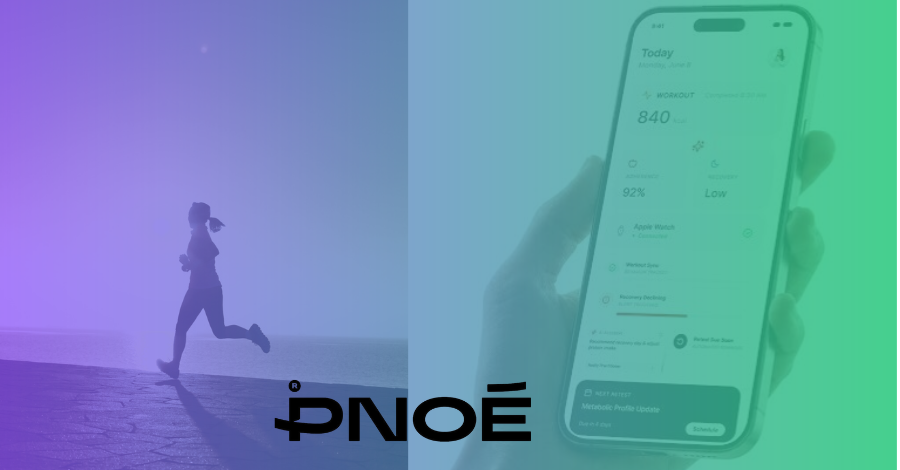
PNOE’s mobile app needed real-time analytics and demanding algorithmic calculations on several health and fitness metrics, based on large volumes of streaming biometric data from many users. Traditional data warehousing, where data is collected and processed overnight, could not meet these needs, and the platform had to scale with a growing user base and increasing app complexity.
Overview:
We designed a streaming data platform that processes, transforms and analyses biometric data on the fly. Built on Apache Kafka and Apache Flink, it handles real-time and retrospective data streams in a common pipeline, while Kubernetes orchestration on AWS lets it scale on demand. A fast OLAP database supports the analytics shown in the app.
Tools developed:
· Real-time streaming data pipeline
· On-the-fly ETL
· Extended Flink functionality for real-time and retrospective streams
· Fast OLAP database for analytics
· On-demand scaling with Kubernetes on AWS
Impact:
PNOE’s app users receive their health and fitness metrics in real time instead of waiting for overnight processing. The platform scales seamlessly as the user base and app features grow, while the optimised ETL keeps memory and processing load under control.
Challenges met: Combining real-time and retrospective streams in one pipeline, extending Flink functionality, controlling memory and processing load, and scalability.
Technologies used: Apache Kafka, Apache Flink, Scala, Kubernetes and AWS.
Client's name and type: Alpha Marine (marine consultancy firm)
Industry: Maritime
Project/Solution: Visualisation engine and data analytics for the Deep Dive Project
Problem:
Alpha Marine needed to analyse complex survey data on the culture of shipping companies, collected through SurveyMonkey and custom Excel worksheets. Different survey formats and data inconsistencies made it hard to standardise the information and turn it into actionable insights.
Overview:
We developed an analytics and visualisation solution for Alpha Marine’s Deep Dive Project. The Deep Dive Data Parser retrieves survey data from different sources and cleans and homogenises it in a generalisable way. On top of this, we designed and programmed in Python an extensive set of diverging infographics, along with automated trend analysis and sparse regression tools that reveal patterns and relationships in the data.
Tools developed:
· Deep Dive Data Parser for data retrieval and homogenisation
· Diverging infographics and static visual analytics in Python
· Automated trend analysis
· Sparse regression analysis
Impact:
Alpha Marine can now standardise and visualise its survey data consistently and gain deeper insight into the culture of shipping companies. Automated trend and regression analysis helps the team quickly identify key patterns and drivers, strengthening the advice it gives clients on cultural dynamics and strategy.
Challenges met: Data inconsistency, data homogenisation and multimodal survey sources (SurveyMonkey and custom Excel worksheets).
Technologies used: Python, Pandas, Matplotlib, Scikit-learn and Tableau.